Moving to a new country is one of the most exciting things a person can do. It is also one of the loneliest. A new city, a new culture, and a calendar with very little in it. You know where the supermarket is. You know your way to work. But building real friendships, finding your people and genuinely feeling at home? That takes time. For many newcomers and expats living in the UK, that process can feel painfully slow.
Football changes that. Not in a dramatic, overnight way. But week by week, session by session, in a way that is calm, natural and lasting. At Football for All, we see it happen regularly. People arrive at one of our local games not quite knowing what to expect. They leave with a bit of sweat on their kit, a few new names in their phone and something that feels a lot like belonging.
Why newcomers and expats struggle to build a social life in the UK
It is worth understanding the scale of what many people face when they arrive somewhere new. According to the Office for National Statistics, around 19% of people living in England and Wales were born outside the UK. That is approximately 11.4 million people, each navigating their own version of the same challenge. How do you become part of a community when you do not yet have one?
The barriers are real. Language can be a hurdle, even for those who speak English well. Cultural differences can make small talk feel effortful. Working patterns leave little time for socialising. And the social structures that people relied on at home, the friends they grew up with, the places they always went, simply do not exist yet in a new city.
Research from the Campaign to End Loneliness has shown that people who move to a new area within the last five years are at significantly higher risk of loneliness. That risk does not care about background, income or profession. It affects students arriving from abroad, skilled workers relocating from Europe, families building a new life and retirees following children overseas. The experience of starting again is, in many ways, universal.

Why Football works for building social connections
There is something about football that sidesteps the usual awkwardness of meeting new people. You do not have to come up with conversation topics. You do not have to explain yourself or your background. You just play.
Research from Oxford University’s Refugee Studies Centre found that football builds what academics call “inward social capital”, which means the confidence, trust and self-belief that help people navigate a new social environment. It also builds “outward social capital”: the ability to connect across different groups, bridge cultural gaps and form genuine bonds with people who might otherwise never have crossed paths.
In plainer terms, football gives newcomers a reason to show up, a shared goal in the moment and a natural framework for conversation before and after the game. Those conversations grow. The familiar faces become familiar people. The weekly session becomes the highlight of the week.
According to Sport England, around 15.7 million people in England play football. It is the most widely played sport in the country and one of the few that truly crosses age, background and ability. Whether you grew up watching the Premier League or played on a dusty pitch somewhere else in the world entirely, the game is the same. That shared language matters enormously when everything else feels unfamiliar.

What a Football for All session looks like
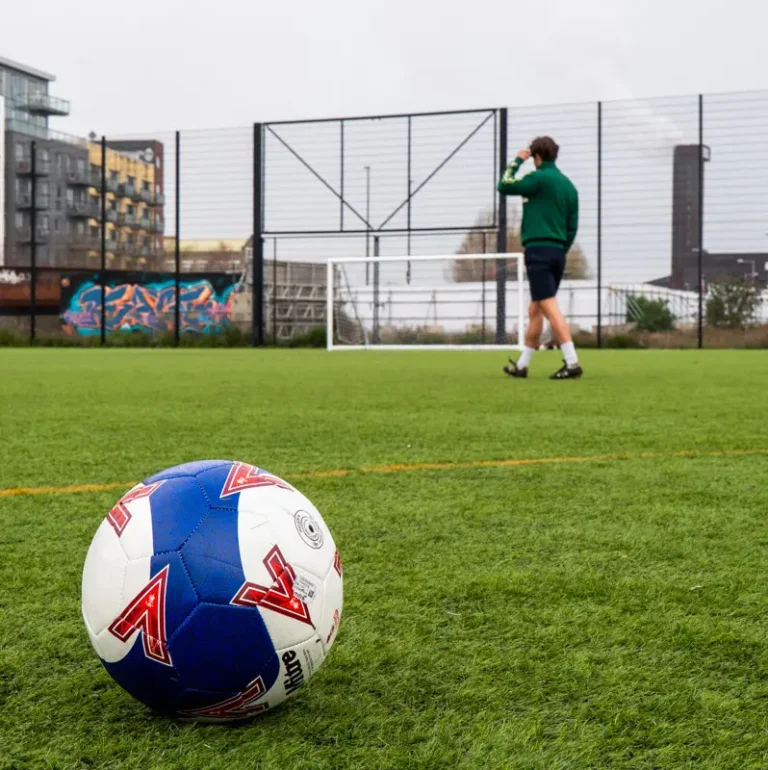
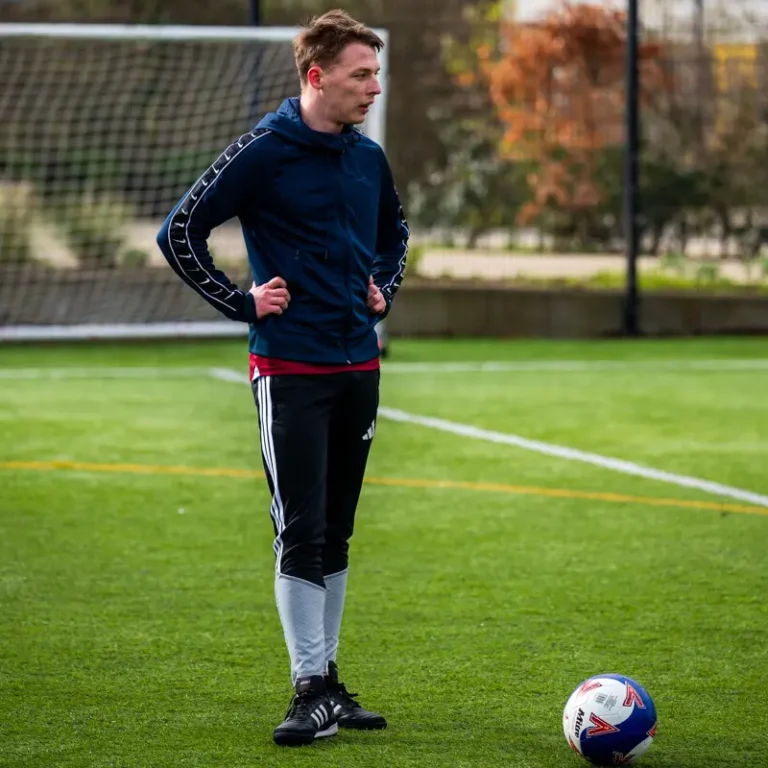
Our sessions are not leagues. We’re not a club. They are not for the fittest or the most competitive players in the room. They are casual, social games, open to any adult aged 18 and over, at all skill levels.
There are no referees. Teams are sorted on the night. The football is small-sided so that everyone stays involved. If someone has not played in years, that is completely fine. If someone played seriously in another country but lost their network when they moved here, that is welcome too. The point is simply to play together.
“When I first moved to London I felt completely invisible,” says Carlos, a regular player at one of our weekly sessions in the city. “I came to one game not knowing anyone. Within a few weeks I had people to message, people to grab a drink with after. Football gave me a door in.”
That door is exactly what Football for All is here to provide.
The Mental Health case for playing
The connection between regular physical activity and mental wellbeing is well established. A major 2023 study published in the British Journal of Sports Medicine found that physical activity is around 1.5 times more effective than counselling or medication in reducing symptoms of depression and anxiety.
For newcomers and expats, the mental health stakes are often higher than average. Displacement, uncertainty, and the absence of familiar support networks all take a toll. The NHS increasingly recognises social prescribing, the practice of recommending community activity and group participation as part of mental health support, as an effective and accessible intervention.
Football delivers multiple benefits at once. The physical exercise releases endorphins and reduces stress hormones. The social interaction combats isolation. The weekly routine creates structure. And the sense of belonging that develops over time is exactly the kind of protective factor that mental health researchers consistently point to as essential for long-term wellbeing.
You do not have to be struggling to benefit from that. You just have to be human.
Football as a cultural bridge
One of the most powerful things about community football is what happens between people who might never otherwise meet. A casual kickabout brings together teachers, delivery drivers, engineers, students, long-term residents and people who arrived last month. On the pitch, none of that context exists. You are just teammates.
Research published in the journal Leisure Studies explored football sessions run for refugees and newcomers across the UK and found that participation helped people move from a state of isolation to one of genuine connectedness. Participants reported decreased anxiety, improved confidence and a stronger sense of belonging in their local area. The benefits were not limited to the newcomers themselves. The sessions changed the outlook of existing local players too, broadening their social circles in ways that simply would not have happened otherwise.
Football is one of the few spaces in modern life where that kind of genuine mixing happens naturally, without anyone having to try particularly hard to make it work.

Finding your local games
Football for All runs weekly sessions at venues across the UK, including Sheffield, Liverpool, Derby, London, Manchester, Leeds, Bristol, Brighton, Cardiff, Edinburgh, Glasgow and the West Midlands. Games are organised through the Footy Addicts platform, which makes it simple to find a session near you and book a spot without any long-term commitment.
You do not need to join a club. You do not need to come with friends. You do not need to prove your fitness or ability. You just need to turn up.
If you are new to an area and looking for a way in, a weekly football session is one of the most straightforward, unpressured, and genuinely enjoyable ways to start building the kind of social life that makes a new place feel like home.
A simple but powerful idea
At Football for All, we believe the game works best when it is open to everyone. Not in theory but in practice. That means affordable sessions. That means welcoming anyone who walks through the gate. And it means understanding that for many of the people who show up each week, it goes far beyond just football.
It is connection. Routine. Laughter. A place in a community that is still taking shape.
For newcomers and expats across the UK, that kind of belonging does not happen by accident. But it does happen. And often, it starts with a kickabout.
To find a Football for All session near you, visit our Find a Session page and book your spot today.
Data and sources cited: ONS migration figures (11.4 million UK foreign-born residents), Campaign to End Loneliness research, Oxford University Refugee Studies Centre, British Journal of Sports Medicine 2023 study, Sport England's 15.7 million football players figure.