As we move past 40, many of us start to notice a shift. Energy levels may not be what they once were, keeping fit can feel like more of a challenge and the idea of joining a gym or running a 5k can feel a little daunting. But what if the secret to staying active and healthy wasn’t about punishing yourself in the gym or pounding the pavements alone? What if it was simply about rediscovering the joy of playing a game you already love? At Football for All, we believe that football offers one of the most powerful, fun and sustainable routes to better health for adults over 40. And the evidence backs it up.
Why staying active and healthy over 40 isn’t a BONUS
Life gets busy. Work, family and everything in between can make it easy to let physical activity slide down the list of priorities. But the reality is that our health risks increase as we get older and the consequences of inactivity become more significant with every passing year.
According to Public Health England, almost one in five adults over 40 in England are classified as physically inactive, meaning they do less than 30 minutes of moderate activity per week. That is around three million people in this age group alone. The same data shows that four in ten adults aged 40 to 60 do not even manage a single 10-minute brisk walk in a month.
The health consequences of this inactivity are serious. Physical inactivity is associated with an increased risk of heart disease, type 2 diabetes, certain cancers and early death. It is also estimated to cost the UK around £7.4 billion every year. Thankfully, these risks are not inevitable. The body responds remarkably well to regular movement, even when you start later in life. And the most effective exercise is often the kind you actually enjoy doing.
What happens to your body after 40
Understanding what changes after 40 can help you take the right steps to stay active and healthy. From our early 30s onwards, we naturally begin to lose muscle mass at a rate of around 3 to 5% per decade. This process, known as sarcopenia, can accelerate if we remain sedentary. Alongside this, bone density begins to decline and our cardiovascular fitness can drop if we are not keeping it topped up with regular exercise.
None of this is cause for alarm. It is simply a reminder that staying active becomes more important, not less, as we get older. The good news is that regular physical activity can slow or even reverse many of these changes. And you do not need to spend hours in the gym to see results.
Photography: Kierian Patton
The surprising power of recreational Football
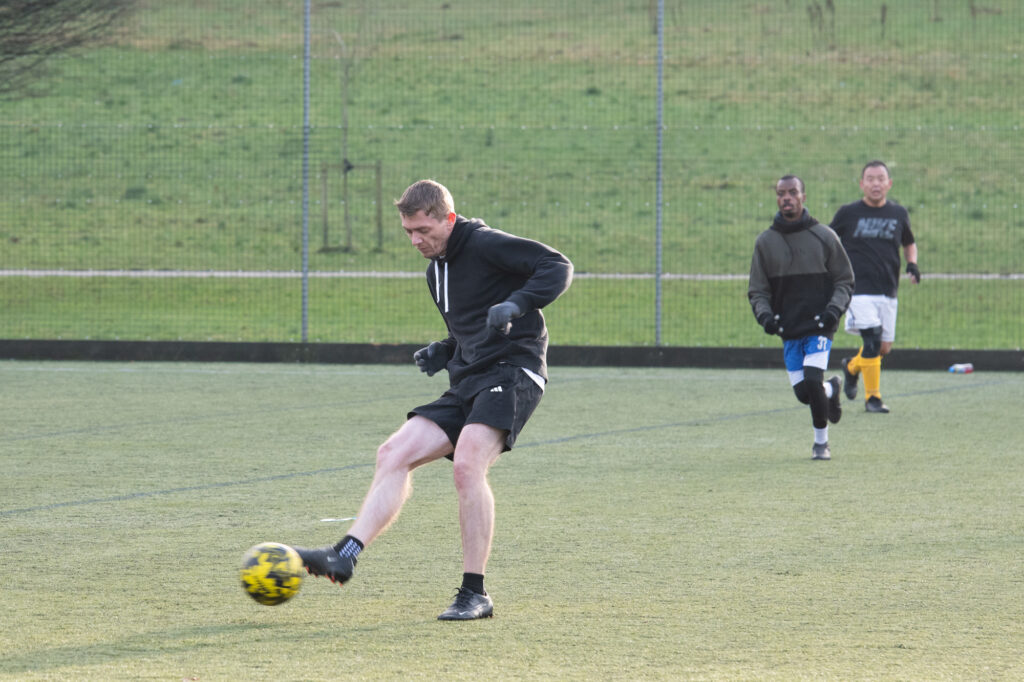
When people think of football, they often picture elite athletes at the top of their game. But recreational football, the kind played in casual sessions and community kickabouts, is one of the most effective forms of exercise available to adults of any age or fitness level. Research published in the British Journal of Sports Medicine found that recreational football game produced broad-ranging physiological benefits, often more pronounced than those achieved through running, interval training or fitness classes.
The physical benefits are impressive
The cardiovascular benefits of playing football are well documented. Studies have shown that regular recreational football can reduce systolic blood pressure by 7 to 8 mm Hg after just three months, which is greater than the reduction typically seen with other forms of exercise over the same period. It also lowers resting heart rate and improves maximal oxygen uptake, which is one of the strongest predictors of long-term health and longevity.
What makes football particularly effective is the way it combines aerobic and anaerobic exercise naturally. During a typical session, players spend significant time at 80 to 90%of their maximum heart rate, which delivers a powerful cardiovascular workout. Yet because the exercise is broken up by moments of rest, walking and social interaction, it rarely feels as intense as it actually is. In studies, recreational football consistently scored lower on perceived exertion than jogging or interval training, even when the physiological intensity was comparable.
Football also builds and maintains muscle mass and bone density through the varied movements involved, including sprinting, turning, jumping and kicking. This makes it a genuinely full-body workout that addresses many of the physical changes associated with ageing.
The mental health benefits are just as real
Staying active and healthy is about far more than physical fitness. The mental and emotional benefits of regular exercise are well established and team sports like football offer something that solo exercise simply cannot match.
Playing football gives you a reason to leave the house, a group of people to connect with and an hour where the pressures of work and daily life simply fade into the background. Research consistently shows that people who are physically active report higher life satisfaction and lower levels of anxiety and depression than those who are not. In fact, inactive people have been found to have roughly three times the rate of moderate to severe depression compared to those who meet activity guidelines.
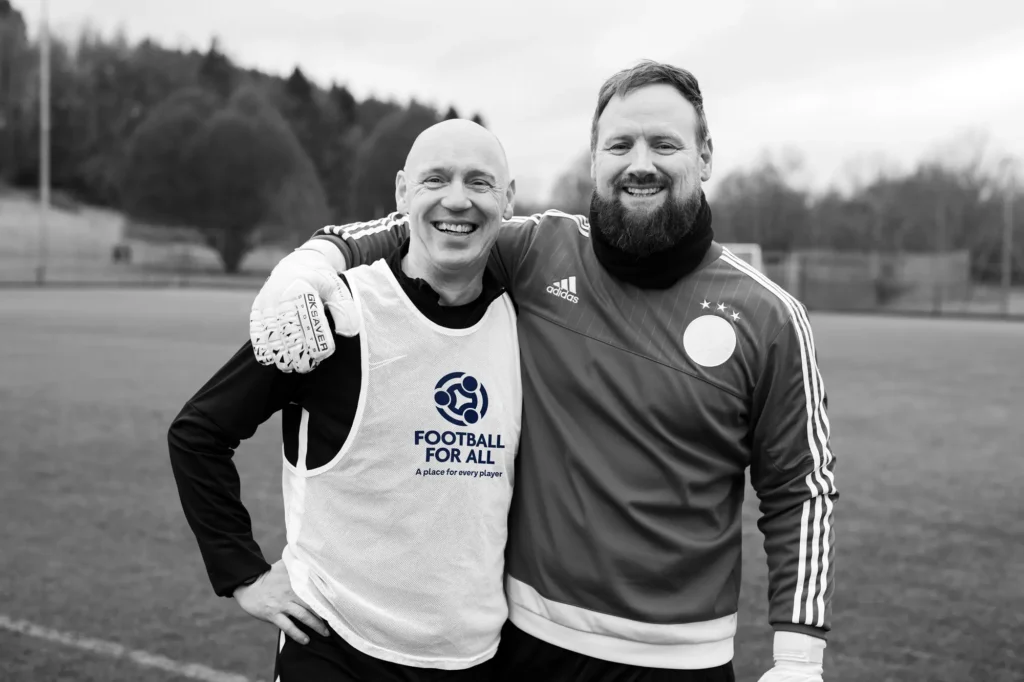
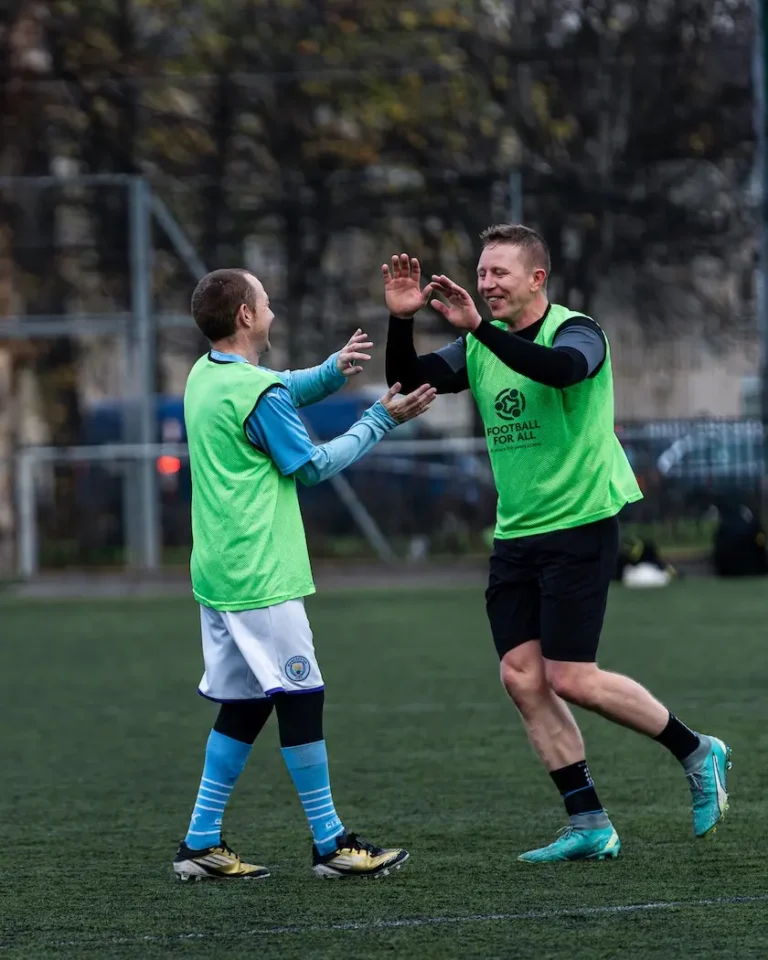
The social dimension of football is particularly powerful. Loneliness is a growing public health concern in the UK and team sports are one of the most effective ways to build genuine social connections. When you play football regularly with new people, you build friendships, a sense of belonging and a shared identity that can be enormously positive for your mental wellbeing.
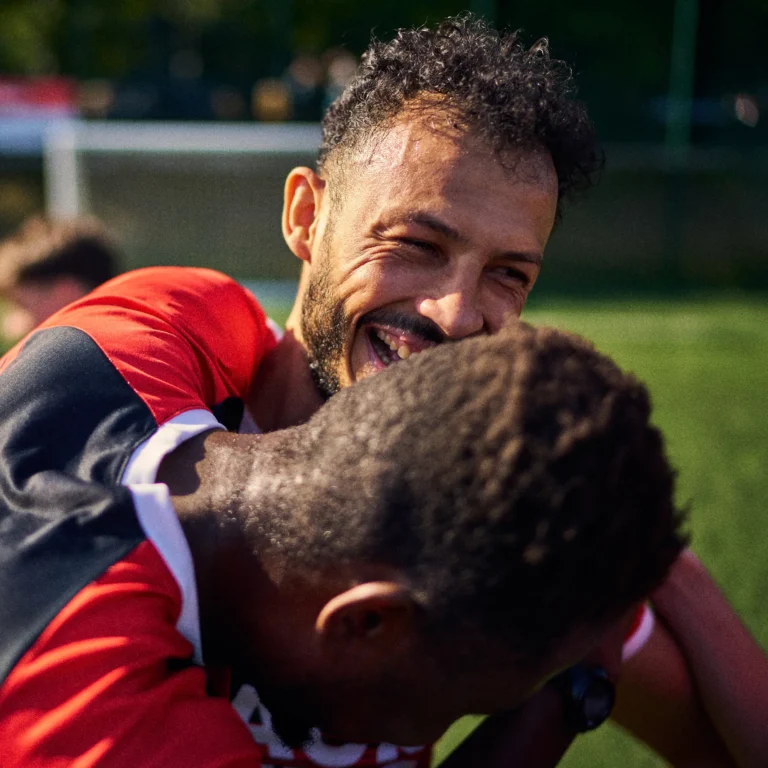
“I hadn’t played football in over 15 years. I was a bit nervous about going along but within five minutes I’d forgotten all about that. It’s the best thing I’ve done for myself in years. I feel fitter, I sleep better and I’ve made some brilliant friends.”
Mark, a regular player at one of our Football for All sessions.
Photography: Kierian Patton
Making Football work for you after 40
One of the most common reasons people give for not getting back into football is that they feel too old, too unfit or too out of practice. We get this message all the time at Football for All. And honestly, that’s exactly why we started doing what we do.
Football is one of the most adaptable sports there is. You do not need to be fast, skilful or particularly fit to enjoy it. Our sessions are focused around inclusion and fun, not competition. There is no pressure to perform and no league table to worry about.
Our weekly kickabouts are welcoming, relaxed, social and open to everyone, regardless of skill levels. You simply find a session, turn up, play and enjoy yourself. No kit required, no long-term commitment and no experience necessary.
Small steps, big results
If you have not been active for a while, the idea of getting back into exercise can feel overwhelming. But the evidence is clear. Even modest increases in physical activity can make a significant difference to your health. You do not need to go from zero to five sessions a week overnight.
Starting with one session a week is enough to begin feeling the benefits. After a few weeks, most people find that they are sleeping better, feeling more energetic and looking forward to their game. There’s something about playing with others that makes it easier to keep going. You’re not just exercising for yourself. You’re showing up for the game, for the group and for the routine that comes with it. That’s what keeps people coming back.
At Football for All, every penny paid to play goes straight back into making more sessions accessible and affordable for everyone in the community. We pay to hire quality 3G or 4G paid astro pitches but we keep our games low-cost so that money is never a barrier to getting involved.
Your invitation to get back in the game
Staying active and healthy over 40 does not have to be a struggle. It can be about having fun, making new friends and rediscovering a love for the beautiful game. Football is one of the most enjoyable and effective ways to look after your body and mind and it is never too late to start.
If you are ready to take the first step, find a Football for All session near you and come along. You might be surprised by how quickly it becomes the highlight of your week.
There’s no pressure to be the fittest or the fastest. You just need a pair of boots and the willingness to give it a go. Most people who come along say the same thing after their first game: “I wish I’d done this sooner.” Football has a way of reminding you what it felt like to play just for the sake of it. A bit of sweat, a bit of banter and a proper run around with good people. That’s often all it takes to feel like yourself again.
Sources: The statistics and research findings in this article are drawn from reputable sources including Public Health England, the British Journal of Sports Medicine, Sport England's Active Lives Survey, and the Cleveland Clinic. These include data from the PHE report on physical inactivity in adults aged 40 to 60 (2018), the Bangsbo et al. (2015) narrative review on recreational football and disease prevention, and published research on sarcopenia and muscle loss in adults.