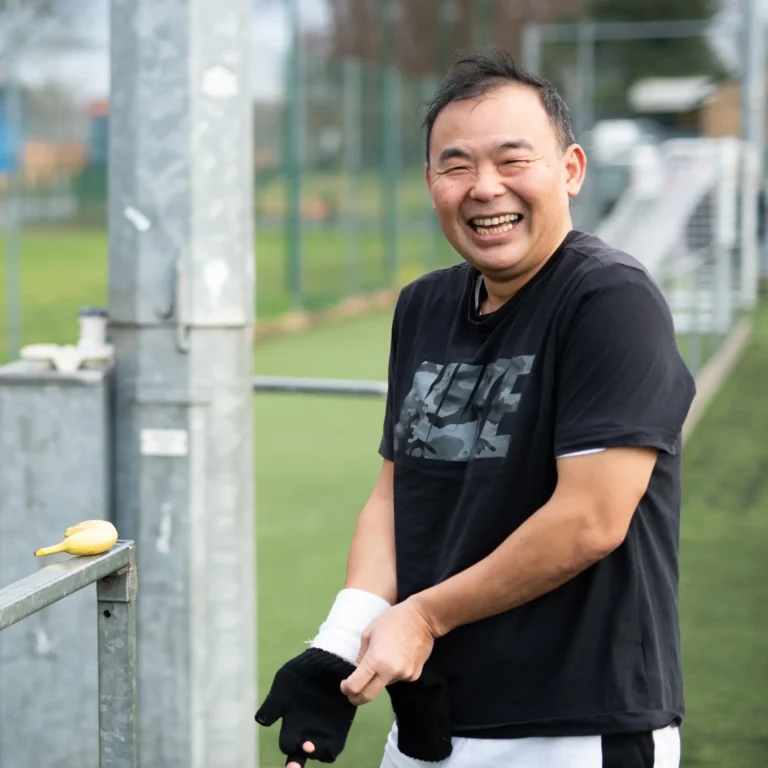
Millions of people can benefit from football on their doorstep
A fresh approach to community healthcare is starting in the UK. The government’s recently announced neighbourhood health services will deploy multi-professional teams into 43 areas to bring “healthcare on the doorstep” of local communities. Crucially, these first wave sites are focused on “working class areas with the lowest life expectancy” in order to tackle “stark and unjust health inequalities”.
The NHS is being reshaped to work within communities rather than apart from them, with less focus on treating illness and more on tackling the roots of poor health. The shift is away from hospitals and towards prevention and support where people live. It also makes room for community activity to be recognised as healthcare in its own right. Recreational football deserves that status. This article uses data and evidence to show how football can help improve health, restore trust and engage people who are often hardest to reach.
Physical activity, social connection and prevention
Prevention is the starting point for better health in deprived communities. The two most powerful forms are regular exercise and social ties. Yet these are often in short supply in poorer areas where health outcomes are worst.
The differences are visible in the numbers. In England’s most deprived neighbourhoods, life expectancy is a decade shorter than in affluent ones. A boy born in Blackpool today can expect to live 73 years, compared with over 83 in wealthier parts of the South. Only 53.9% of adults in deprived areas meet activity targets, compared with 74.0% in wealthier areas. More than a third of adults in these communities are inactive, nearly twice the rate elsewhere. Physical inactivity contributes to one in six deaths in the UK and costs £7.4 billion a year, with almost £1 billion falling on the NHS. Regular activity is proven to prevent or manage over 20 chronic conditions.
Loneliness also takes a heavy toll. It raises the risk of early death by 26% and harms physical health as well as mental wellbeing. Communities with declining pubs, clubs and social hubs are left more isolated, particularly older men. Building connection is central to the new neighbourhood health model.
Football addresses both challenges at once. It delivers exercise that protects against disease and provides a social setting that strengthens networks. A casual kickabout is simple, accessible and effective. In disadvantaged areas, it could be the most powerful form of preventive healthcare available.
Football’s reach, trust and scalability in communities
Why football, specifically? Because no other intervention matches its reach, cultural weight, and scalability. Football is the people’s game in the UK. It cuts across age, class and background. Over 15 million people in England play regularly, supported by more than 30,000 clubs and 100,000 teams at grassroots level. It is by far the nation’s most popular team sport, connecting communities from estates to small towns. Importantly, it reaches people the NHS often struggles with. Many who avoid formal institutions will happily show up for a local game. The sport carries trust and enthusiasm. It is familiar, enjoyable and non-judgemental.
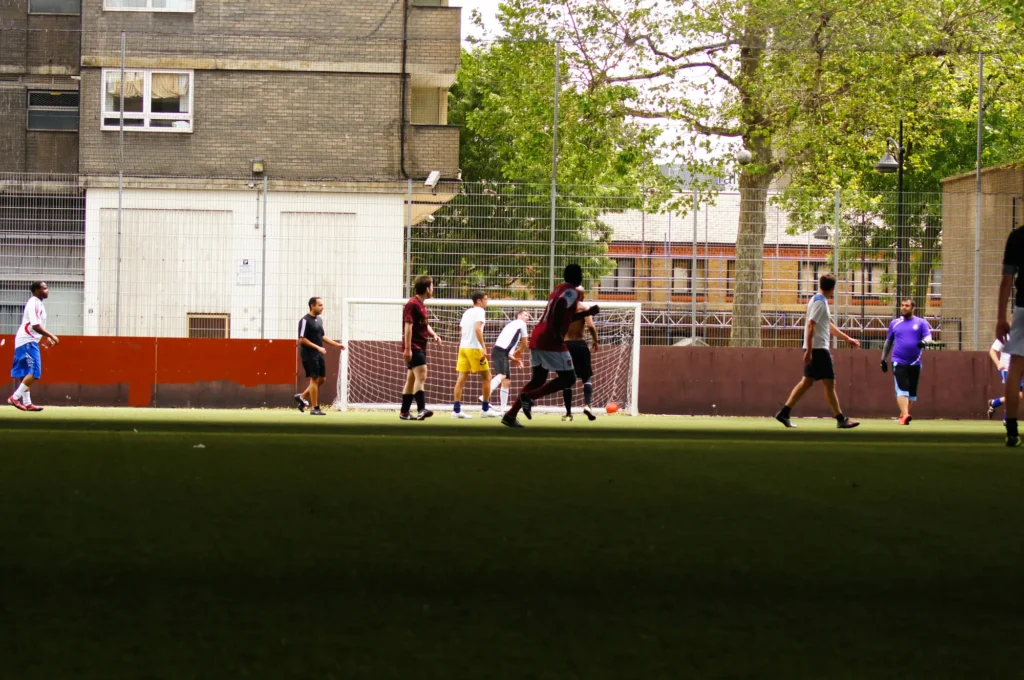
The benefits go beyond fitness. FA research shows adult grassroots players report higher confidence, better health and more trust than those who play no sport. Many describe their weekly game as a lifeline, a source of routine, camaraderie and belonging. For someone isolated or inactive, the pitch becomes a place where they feel welcome and motivated.
Programmes built on football show what this can achieve. In Scotland, Football Fans in Training targeted overweight men through their clubs. Men who would never join a weight-loss class signed up when sessions were run at their stadium. Results were clear, average weight loss of almost 5% after a year, with benefits lasting beyond three years.
Football is also scalable. The infrastructure already exists. There are pitches, leisure centres and a volunteer network across the UK. Millions already play for enjoyment. With modest support, this ecosystem can deliver health benefits at scale. Football is self-sustaining because people play for love of the game. The NHS does not need to build new structures. It can work with what is already in place and use football’s momentum to improve health in communities.
Community Healthcare services need local partners and Football for All can help
One of the most promising elements of the new NHS neighbourhood health rollout is the creation of joined-up, community-led teams. Each neighbourhood will have a lead responsible for bringing together a broad mix of professionals to form a holistic health team. These teams will not be limited to GPs and nurses but will also include social care workers, pharmacists, mental health specialists, social prescribers and crucially, partners from the voluntary sector.
Everyone knows that a patient’s health is not achieved through medicine alone. The programme depends on local knowledge, public trust and engagement that stretches well beyond the clinic. This is where the mission of Football for All fits neatly, as a non-profit organisation committed to making casual football accessible to everyone.
Football for All’s guiding principle is that nobody should be excluded from the benefits of the game, whatever their age, background or ability. In practice, that means creating sessions that are welcoming, affordable and responsive to community needs. Our games make regular participation, improved health and everyday happiness part of community life. This philosophy mirrors the NHS Plan for Change, which calls on providers to look “beyond the condition” and deliver tailored support that addresses the real drivers of wellbeing. In this model, community healthcare teams manage the clinical side while Football for All adds the social and physical activity dimension. Together it creates a form of integrated care that treats the whole person.
The partnership can be very practical. A GP or social prescriber who sees a patient struggling with diabetes, depression or inactivity can go beyond handing out a leaflet. They can directly connect that patient to a Football for All session, perhaps even walk them over and play together. Because the group is rooted in the local community, the patient is far more likely to turn up and, crucially, to keep returning. The pitch becomes an informal extension of the primary care system, a setting where friendships grow, prevention happens naturally and early signs of ill health can be noticed before they escalate.
The NHS has already endorsed “social prescribing” for this very reason, recognising that community activity can be a form of medicine in its own right. By partnering with groups like Football for All as voluntary, community and social enterprise partners, the new neighbourhood health teams can make a running start. We bring decades of casual football knowledge and an established base of inclusive sessions. The NHS brings medical expertise and logistical support.
Together, the programmes we design can become part of the weekly rhythm of community life. GPs remain cornerstones of this system, as planned, but they cannot carry the load alone. Local organisations provide the connective tissue that links health teams to the residents they serve. Football for All’s reach and credibility allow us to bridge trust gaps, showing that healthcare is not an abstract system but something alive in the places people already gather. When a neighbourhood sees doctors and nurses working alongside volunteers and neighbours on the same pitch or at the same community centre, integrated care stops being a slogan and becomes a lived reality.
The social value and cost-effectiveness of Football
The question of whether the NHS should invest in community football is easily answered by the evidence. Sport England’s 2024 analysis calculated that community sport and physical activity in England deliver £107 billion of social value each year. Of this, £10.5 billion comes directly from reduced costs to the health and social care system. Football is the main engine of these benefits. The FA reports that grassroots football alone contributes £15.9 billion per year to society. This includes £3.2 billion in healthcare savings and almost £1 billion from wider outcomes such as lower crime rates and stronger educational outcomes.
These numbers show that football is not simply a leisure activity. It is preventive healthcare in practice, easing demand on overstretched NHS services.
The FA’s research illustrates this in detail. Each year, adult participation in football prevents around 259,000 cases of physical and mental health conditions. Conditions such as diabetes, heart disease and depression are less common among those who play football regularly. This translates to thousands of people who avoid medication, specialist care and hospital treatment. Children also benefit. Football reduces obesity rates, preventing around 200,000 cases and saving the NHS £110 million as those children grow into healthier adults. These outcomes are real, significant and directly linked to participation.
Crucially, football delivers this impact at very low cost. Our sessions are led by volunteers and supported by our team, without reliance on government budgets. Players themselves invest about £326 a year in equipment and related costs. The value of health benefits gained is far greater than the money spent. For the NHS, supporting football is extremely cost-effective. To put this in context, the Football Fans in Training (FFIT) programme was evaluated at about £13,000 per quality-adjusted life year (QALY). This is well below the NHS threshold for cost-effective interventions and far cheaper than many common treatments that run into tens of thousands per QALY.
There is also an economic dividend. Healthier citizens contribute more to society and depend less on public services. Every illness prevented means fewer sick days, less reliance on welfare and greater productivity. Beyond economics, the social value is just as important. Football builds confidence, strengthens communities and combats loneliness. These gains compound across a lifetime. A man who finds football in middle age may avoid chronic illness later on. An older woman who joins a local football game might stave off dementia or depression. These are not distant ideals but practical, measurable outcomes of embedding football into the health system.
Football for All is a vital partner in Community Health
As neighbourhood health services roll out across the NHS, football should be recognised as part of the essential infrastructure of community health. Football for All, alongside many local organisations, stands ready to partner in this effort. Our focus is to make football accessible to everyone. This directly supports the NHS ambition of making the right support available on people’s doorsteps. The weekly small-sided games we run are interventions that touch health, social life and community wellbeing.
We are already working to build connections with the NHS, county FAs and councils. Our goal is to align football with NHS priorities. That might mean running football groups for women in areas where obesity rates are high or local football for older adults at risk of social isolation. With respectful data sharing, we can show outcomes clearly. Self-reported improvements in mental health sit alongside measurable changes such as reduced weight or lower blood pressure. This integration is mutual, doctors guiding patients towards football and football groups feeding observations back into the health system.
The government has committed £10 million to the first wave of neighbourhood health sites. As the programme expands, some of that money must reach community sport. It can fund staff who link GP surgeries with local games or improve facilities so that more people can join. This is infrastructure investment, just as valid as building a ward or upgrading a clinic. Parks, community centres and pitches are part of the nation’s health system when they are used to prevent illness. Football for All can act as a bridge to ensure that happens.
This is a pivotal moment. The NHS has long acknowledged that prevention is more effective and less costly than treatment. Football combines physical activity and social connection, two of the strongest preventive tools we have. The data shows they reduce disease, improve mental wellbeing and lengthen lives. By weaving football into the neighbourhood health model, we can strengthen public health in a way that is sustainable, culturally familiar and deeply rooted in local life. Football is this partner in care, a place of prevention and a foundation for healthier communities across the UK.