Current state of local kickabouts
Grassroots community football in the UK runs on passion and shoestring budgets but soaring costs are threatening its affordability. Many local kickabouts strive to charge around £5 per player, a figure long seen as reasonable and inclusive. However, maintaining that price point is getting harder each year due to rising pitch hire fees, equipment costs and general inflation. This article compiles the latest data and examples to illustrate how hard it is to keep football affordable, why it matters and what support could help.
Escalating pitch hire costs across the UK
One of the biggest pressures on grassroots football is the rising cost of hiring pitches. Recent data show significant increases over the past 5–10 years:
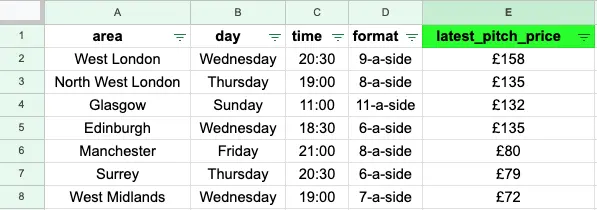
- In West London, pitch hire averaged £54 per session in 2015. By 2025, that figure has reached £105, an increase of almost 94% in just over a decade. Prices that once supported weeknight football culture now make even casual games feel like an expense to plan around. For many players, the rise has turned what used to be a cheap local kickabout into a financial commitment
- In Glasgow, pitch hire costs rise by roughly 10% each year. The increases may appear modest in isolation but over time they add up to a steep climb. Regular players now pay significantly more each season, while teams that used to book multiple sessions a week are cutting back to save money
- In Leeds, the average session fee rose from £30 in 2018 to £69.50 in 2025, a jump of more than 130% in seven years. The city’s grassroots football scene, once sustained by affordable community pitches, has been hit hard
- In the West Midlands, hire costs increased from £60 to £80 per session within just a few years, a rise of around 33%. The region’s clubs have had to stretch budgets, share facilities or reduce training time. What was once a basic community resource has become a strain on both players and organisers
Such rises directly squeeze the budgets of community groups. A typical amateur side might have paid ~£35 for a pitch a few years ago. Now it’s £70+ for the same slot. To cover a £70 hourly pitch fee, a group must either recruit more players or charge more per person. Many have valiantly tried to hold the line at around £5 per player but when pitch hire goes up 15–20%, that math no longer adds up.
One grassroots club volunteer lamented: “Back in the day people did it for the love of the game, but today everybody [charging for pitches] is in it to make a profit… the shortage of pitches means people can charge whatever they want”
Regional variations do exist. Hire charges in parts of London and the Southeast tend to be higher than the national average due to scarce facilities. A full-size 3G astroturf in a major city can easily cost £100 or more per hour in peak times, forcing adult 5/6-a-side groups to split costs among many players. By contrast, some rural council pitches remain under £60 per game but often suffer from poorer quality. The key trend everywhere is upward. Almost nine in ten clubs (87%) reported their pitch rental costs increased by at least 5% this past year, with about 10% seeing hikes above 25%. The era of stagnant or subsidised pitch fees is over and community organisers are feeling the strain.
Before Covid, football was one of the most accessible ways to stay active. After Covid, it was supposed to be part of the national recovery effort. Now, with prices surging alongside the cost of living, access to sport has never felt more limited. Healthy living is meant to be encouraged. Instead, it’s being invoiced.
A self-funded, community-powered model
One of the most surprising aspects of Football For All is that we operate entirely without external funding. From day one, we chose the path of being self-sustaining. Why? Because it keeps our sessions independent, resilient and accessible. We never wanted to wait around for grants or charge high fees to cover big overheads. Instead, we trusted that if we kept costs ultra-low and quality high, the community of players would sustain itself. And it has.
No profit, no overhead
We truly mean it. We charge just enough to cover costs and nothing more. Every pound you pay to join a Football For All session is immediately put to work in sustaining the community. There are no owners pocketing a profit, no ‘fat’ in the budget. In fact, every penny is reinvested into keeping the sessions running. Here’s how that roughly breaks down:
Pitch Hire
This is by far the largest cost. Renting safe, accessible pitches (mostly local school pitches) takes the biggest chunk of the game fee. By securing these spaces, we’re not only enabling play but also supporting those schools and community facilities through our hire fees (the money goes back into their upkeep). It’s a virtuous cycle and it helps keep a local pitch open and maintained for everyone.
Equipment
Football might be simple but running weekly games for hundreds of players chews through gear. We replace footballs, bibs and other kit constantly. Going through over 100 footballs every month just to meet the demand! Quality equipment is crucial for safety and fun, so part of the game fee goes toward new balls and gear as older ones wear out or disappear. In fact, nearly a third of grassroots clubs report having to use equipment beyond its normal lifespan due to tight budgets, which is an issue we try to avoid.
Operational costs
We keep overheads incredibly low. Our sessions are organised by volunteer Game Hosts (who play for free in return for helping run the game) and we use an online platform (Footy Addicts) for coordination. We charge the minimum needed to cover costs. There are modest expenses like insurance, first aid supplies or the booking platform’s fees but these are a small fraction of the cost. Essentially, there’s 0% spent on ‘head office’ luxuries. The community is the ‘office’!
Community Expansion

If there’s ever a surplus (for example, a fully-booked session that brings in a bit more than the direct costs), we funnel that into starting new sessions in new areas. That means hiring pitches in neighborhoods that lack affordable football and covering initial costs until those games become self-sustaining. This is how we’ve managed to expand to dozens of locations without outside funding. By continuously reinvesting any extra into reaching more people.
Of course, choosing to be self-funded hasn’t been the easy road. It means growth can be slower and contingent on weekly turnouts. We can’t offer everything for free and we sometimes have to cap capacity until we can afford another pitch slot. But it’s the right thing to do for our mission. It keeps us focused on players. And as long as the community keeps playing, we can keep running.
Why it matters and ways forward
Keeping local kickabouts at that ~£5 per player affordability level is crucial for community health, game development and social cohesion. When football is accessible to all, regardless of income, it yields enormous benefits:
Physical and mental health
Regular participation in sport helps keep people active and healthy. Playing football improves cardiovascular fitness and mental wellbeing, reducing burdens on the NHS. There are huge social value returns. One analysis estimated grassroots football generates over £600 million in adult social care value each year in London alone, by improving health outcomes. If fees rise beyond reach, fewer people play and those health benefits are lost (especially in disadvantaged areas where club football might be the only affordable exercise). It’s notable that the least affluent families have the lowest activity rates. Only 44% of children from low-income homes meet recommended activity levels, versus 55% from more affluent families. Affordable local football can help close that gap.
Community and social inclusion
Local football brings together people from all walks of life. It combats isolation by creating friendships and support networks. This was highlighted by the British Red Cross, noting that sport and physical activity can reduce loneliness by forging social ties. The Football for All ethos is exactly that. We make sure anyone can turn up and feel welcome, which strengthens community bonds. A vibrant local football can make a town or neighborhood feel more connected and alive.
Given these high stakes, what support would help keep local kickabouts affordable?
We’ve shown that a self-funded £5 kickabout model can work. We’re proof that football for everyone can be sustainable. But to be completely honest, scaling this mission and weathering the rising costs would be a lot easier with a bit more support. We’ve basically reached a point where demand is outstripping supply. Currently, only 16% of our sessions are above the £6 per game mark. 84% of our games are still £6 and less to play. There are so many more communities that want affordable sessions, so many more players (men and women alike) asking ‘Can you start a session in our area?’, yet our limited funds mean we can only expand gradually.
Imagine what we could do with additional funding or sponsorship:
- We could launch new sessions faster in high-need areas (those towns or city boroughs that currently have no casual football opportunities). With a modest grant to cover initial pitch hires, we’d activate those waiting lists overnight
- We could keep sessions completely free for certain groups. For example, unemployed or low-income players. Right now we occasionally waive fees or run free taster games but funded support could make this a regular part of the programme
- We could invest in more and better equipment. Not only more footballs (so we’re not scrambling when 5 balls burst in a week!) but also extra bibs for larger games. Quality equipment ensures everyone has a good experience and stays safe.
Crucially, we could tackle the pitch crisis head on by subsidising hires or partnering with facility owners. For example, a sponsor could help us block-book slots at a community rate for a year. Or a friendly council could designate certain nights as ‘Football For All’ nights with reduced fees. These interventions would directly keep the £5 tradition alive in the face of inflation.
And let’s not forget the human side. For us organisers and volunteers, this isn’t a business venture. It’s a labor of love. We pour countless hours into coordinating games, recruiting new hosts, answering player questions, cleaning up after games. All unpaid because we genuinely believe in the mission. There’s nothing quite like seeing a person’s face light up after their first game in years or hearing someone say ‘thank you, I really needed this.’ That’s what drives us. Football For All is about creating opportunities and joy through sport. With a bit more support, we know we can create those opportunities for thousands more people who are currently on the sidelines.
Help us keep Football for All
If you’ve read this far, you understand that ‘simple’ £5 local kickabouts actually mean the world to a lot of people and it rests on delicate economics. To keep it going and growing, we invite anyone who believes in our cause to step in and help in whatever way you can:
Equipment Support
If you have access to football equipment or can sponsor some bibs, we will gladly distribute it. We’re not kidding about the 100+ footballs a month. Providing balls and bibs is a direct way to lower our expenses and keep sessions running smoothly.
Pitch Partnerships
We kindly ask local councils, schools or sports venue operators to work with us on making space available. Underutilised pitches, or community-use agreements can make a real difference. If you can offer a community rate or identify a slot for us, let’s talk. Access to affordable pitches is the #1 limiting factor for growth.
Spread the Word
Not all support is monetary. By simply sharing our story and mission, you can help us find the next volunteer host, the next player who needs this in their life or a potential supporter who resonates with our values. A local football movement thrives on community buzz.